

Bitcoin ASIC Miners: A Comprehensive Overview
Intro
Bitcoin mining has actually progressed dramatically because the cryptocurrency's inception in 2009. Initially, miners used central processing devices (CPUs) to confirm purchases and secure the network. As Bitcoin obtained popularity, the mining procedure ended up being more affordable, leading to the advancement of more reliable hardware. Today, Application-Specific Integrated Circuit (ASIC) miners control the Bitcoin mining landscape. These specialized gadgets are developed entirely for mining cryptocurrencies, offering exceptional effectiveness and efficiency compared to general-purpose hardware.
What Are ASIC Miners?
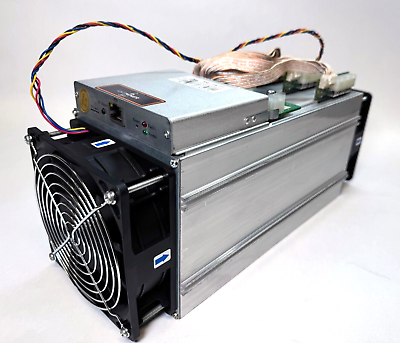
ASIC miners are equipment devices particularly crafted to execute the complex mathematical computations required for Bitcoin mining. Unlike CPUs or graphics processing units (GPUs), which are flexible but much less efficient, ASICs are optimized for a solitary task: resolving the cryptographic challenges that validate transactions on the Bitcoin blockchain. This specialization allows ASIC miners to accomplish substantially higher hash prices while taking in much less power, making them the favored option for significant miners.
Exactly How ASIC Miners Work
Bitcoin mining includes competing to resolve a cryptographic hash feature, especially SHA-256. The initial miner to solve the problem makes the right to add a brand-new block to the blockchain and is awarded with recently produced bitcoins and transaction costs. ASIC miners stand out at this task by doing trillions of hash estimations per 2nd (TH/s). Their style is tailored to carry out the SHA-256 formula with optimal effectiveness, much going beyond the capacities of CPUs or GPUs.
Trick Attributes of Bitcoin ASIC Miners
1. Hash Rate
The hash rate determines the variety of calculations an ASIC miner can do per secondly. Greater hash prices increase the possibility of solving a block and making incentives. Modern ASIC miners, such as the Bitmain Antminer S19 Pro, brag hash rates exceeding 100 TH/s.
2. Energy Efficiency
Power intake is a crucial consider mining productivity. ASIC miners are developed to maximize hash prices while lessening power usage. Efficiency is usually determined in joules per terahash (J/TH). The MicroBT Whatsminer M30S takes in around 34 J/TH, making it one of the most reliable miners on the market.
3. Sturdiness and Life-span
ASIC miners are built to run continuously under heavy work. Their lifespan is limited by elements such as warmth dissipation and technical obsolescence. A lot of ASICs continue to be successful for 2-3 years before more recent, a lot more effective models make them out-of-date.
Popular Bitcoin ASIC Miners
1. Bitmain Antminer Collection
Bitmain, a leading manufacturer of ASIC miners, produces the Antminer series. Versions like the Antminer S19 and S19 Pro are renowned for their high hash rates (up to 110 TH/s) and power effectiveness (29.5 J/TH).
2. MicroBT Whatsminer Series
MicroBT's Whatsminer collection, including the M30S and M50S, contends very closely with Bitmain's offerings. The M30S++, as an example, delivers a hash price of 112 TH/s with an efficiency of 31 J/TH.
3. Canaan Avalon Miners
Canaan's Avalon miners, such as the A1246, supply an equilibrium of efficiency and price. The A1246 offers a hash rate top of line crypto miner (Read More Listed here) 90 TH/s with an efficiency of 38 J/TH.
Advantages of ASIC Miners
1. Superior Performance
ASIC miners outmatch CPUs and GPUs by orders of size, making them important for competitive mining procedures.
2. Power Effectiveness
Their enhanced design reduces electricity costs, a considerable cost in mining procedures.
3. Productivity
High hash rates and low energy consumption convert to greater earnings, particularly in large-scale mining ranches.
Challenges and Downsides
1. High Initial Cost
ASIC miners are costly, with rates varying from $2,000 to $6,000 each, depending upon the design.
2. Restricted Use Instance
ASICs are made specifically for mining specific formulas (e.g., SHA-256 for Bitcoin). They can not be repurposed for other jobs, unlike GPUs.
3. Fast Obsolescence
The relentless pace of technical innovation implies ASIC miners rapidly become obsolete, needing frequent upgrades to stay affordable.
The Future of ASIC Mining
The ASIC mining sector continues to progress, with producers pressing the limits of efficiency and efficiency. Advancements such as liquid cooling and more innovative semiconductor modern technologies (e.g., 5nm and 3nm chips) guarantee to even more improve ASIC capabilities. Environmental worries and governing analysis over energy intake might shape the future of Bitcoin mining, possibly leading to even more lasting practices.
Final thought
ASIC miners have transformed Bitcoin mining, using unequaled effectiveness and performance. While they come with high expenses and fast obsolescence, their advantages make them crucial for significant miners. As the sector progresses, ASIC modern technology will certainly remain to play a critical duty in securing the Bitcoin network and driving the cryptocurrency ecosystem ahead.
Today, Application-Specific Integrated Circuit (ASIC) miners dominate the Bitcoin mining landscape. ASIC miners are equipment devices especially crafted to do the complex mathematical calculations required for Bitcoin mining. The hash rate measures the number of estimations an ASIC miner can do per second. ASIC miners are made to maximize hash rates while lessening power use. ASIC miners have reinvented Bitcoin mining, using unmatched effectiveness and performance.